Manual Handling on Site: When It's Required and How to Control the Risk
When is manual handling required in construction? Learn when the duty applies, how to assess and control lifting risks, and when to review on UK sites.
6 min read

TL;DR
When is manual handling required in construction? Learn when the duty applies, how to assess and control lifting risks, and when to review on UK sites.
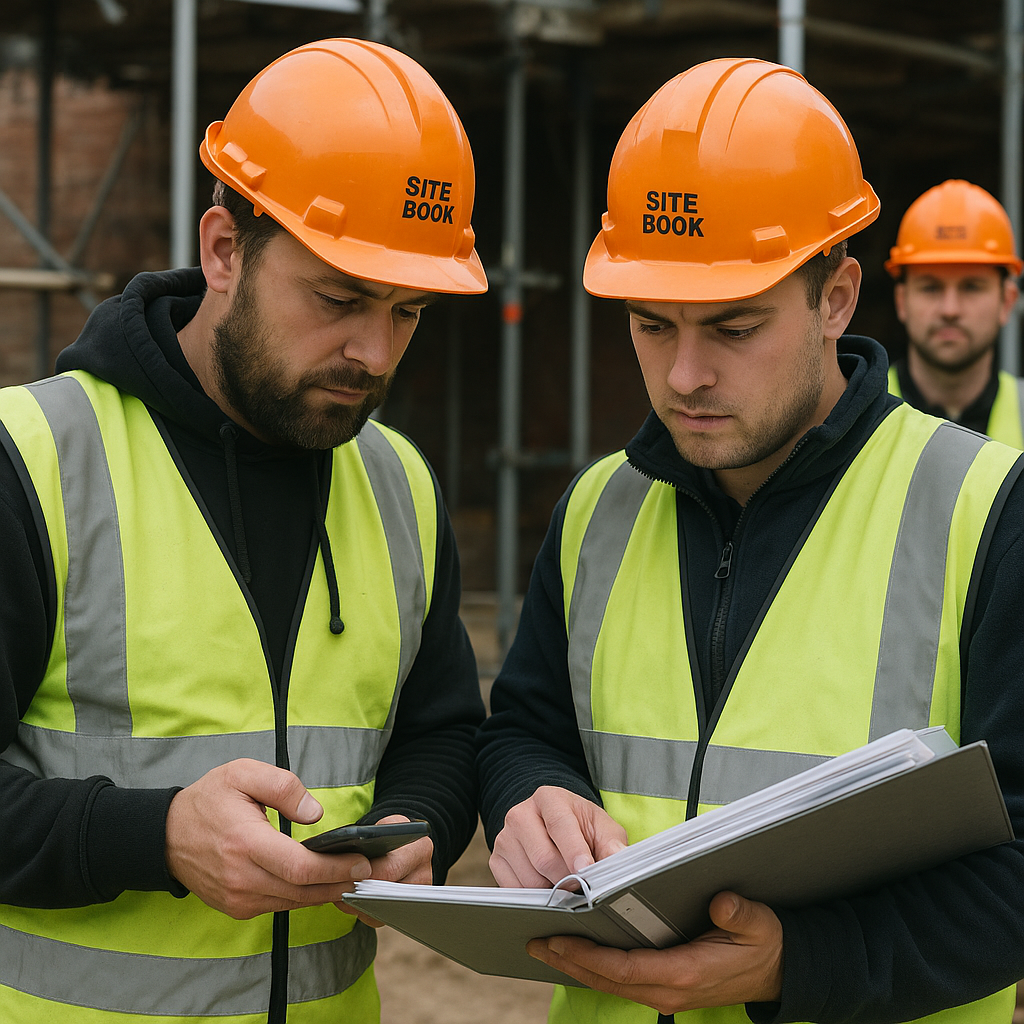
Manual handling controls are required on almost every construction job where workers lift, carry, push or pull materials. Under the Manual Handling Operations Regulations 1992, you must prevent or reduce the risks from these tasks. That means if your work involves moving loads by hand — bricks, plasterboard, kitchen units, tools, scaffold boards — you need to assess and control it. There's no minimum weight that switches the duty on or off.
This matters because handling is the most commonly reported cause of over-seven-day injuries in the industry, and skilled construction trades have one of the highest rates of back injuries and upper limb disorders. If you're a sole trader or run a small firm, that injury lands on you or the person you can't afford to lose for three weeks.
When is manual handling assessment required on a construction job?
The short answer: whenever a task involves lifting, lowering, carrying, pushing or pulling a load by hand or bodily force, and there's a foreseeable risk of injury. The Manual Handling Operations Regulations 1992 says you must prevent or reduce those risks. HSE recommends following the Assess, Control and Review model.
In practice, that covers the bulk of what happens on a domestic or light commercial site:
A roofer carrying tiles up a ladder
A plumber shifting a cast iron radiator or a boiler
A kitchen fitter manoeuvring a stone worktop
A groundworker barrowing wet concrete across uneven ground
An electrician pulling heavy SWA cable through a run
A scaffolder passing boards and tubes hand to hand
Don't accept these injuries as an inevitable part of the work. That's the exact point HSE makes. The duty isn't triggered by a magic number of kilograms — it's triggered by the risk of harm from the task, the load and the conditions.
What should you assess before lifting or carrying?
HSE breaks the assessment into a few plain questions. Work through them for the jobs your crew actually does.
Who is doing the handling?
Think about the person. What do they have to lift and carry? Do they also have to lower, push or pull loads? Give particular consideration to anyone known to have an existing problem, like a back injury. A labourer coming back from a shoulder strain shouldn't be the one humping bags of ballast up a scaffold.
What does the task involve?
Estimate the likely risks from the task itself. Pay attention to work that involves:
Holding loads away from the body
Twisting, stooping, working overhead or reaching upwards
Large vertical movements
Long carrying distances
Strenuous pushing or pulling
Repetitive handling
Also think about job demands and time pressure. When people are rushed, they resort to their own physical strength instead of using lifting aids, or they don't get enough rest and recovery time. A kitchen fit-out running behind on a Friday afternoon is exactly when someone tries to lift a full cabinet solo.
What is the load like?
Consider the load itself. Is it heavy or bulky? Difficult to grasp? Unstable or likely to move unpredictably? Harmful — sharp or hot? Awkwardly stacked or too large to see over? A sheet of plasterboard isn't especially heavy, but it's large, floppy and hard to grip, which is why two people carrying it beats one every time.
These factors create excessive stresses and strains on the body. That can cause immediate damage — strains and sprains to muscles and tendons — or lead to longer term, recurrent musculoskeletal disorders (MSDs).
How do you control manual handling risks in practice?
Once you've assessed the task, control it. The best control is to design the handling out entirely, then work down from there. Realistic options on a small site include:
Avoid the lift. Order materials in smaller packs, or have them delivered to the point of use rather than dumped at the gate. A pallet placed near the scaffold saves a hundred trips.
Use mechanical aids. Wheelbarrows, sack trucks, pallet trucks, board lifters, plasterboard trolleys and glass suckers all shift the load off your back. A worktop lifted with vacuum suckers by two fitters is far safer than a bear hug.
Split the load. Half-fill the barrow with concrete. Break a bulk bag into buckets. Carry six tiles instead of twelve.
Team lift. Two people on the radiator, boiler or long timber, with one person calling the lift.
Improve the route. Clear the walkway, sort out uneven ground, and cut the carrying distance so nobody's twisting round scaffold poles with an armful of boards.
Write these controls down where they belong — in your risk assessment and method statement for the job. If you're producing these documents by hand every time, a RAMS tool built for construction trades lets you generate task-specific manual handling assessments without starting from a blank page. You can also try a free RAMS generator to see how the manual handling controls read before you commit to anything.
Manual handling and MSDs: why it's worth getting right
The term MSD covers any injury, damage or disorder of the joints or other tissues in the upper limbs, lower limbs or the back. Symptoms include pain, aching, discomfort, numbness, tingling and swelling. Workers who suffer from MSDs may have a reduced ability to do tasks, along with recurrent or long term pain.
For a small firm, that isn't abstract. If you're the only bricklayer in the business and your lower back goes, the job stops. Skilled construction and building trades are among the occupations with the highest estimated prevalence of back injuries and upper limb disorders — this is a trade problem, not a paperwork problem. Controlling handling protects the people who keep your firm running.
When should you review your manual handling controls?
The HSE model is Assess, Control and Review. Review isn't a one-off — it's the third leg. Sensible triggers to revisit your assessment include:
The materials change (heavier units, different packaging, a bulkier product)
The site conditions change (a lift breaks down, access gets tighter, the ground turns to mud)
Someone reports aches, strains or a near miss lifting a load
A new worker joins who hasn't done the task before
Time pressure forces shortcuts around the lifting aids you planned to use
On a job that runs several weeks, conditions rarely stay still. The worktop that arrived on a flat drive in week one might have to be carried up three flights when the lift's out in week four. That's a different task and a different risk.
Fitting it into your site paperwork
Manual handling controls sit naturally inside your wider job planning. On projects that need a construction phase plan, your handling arrangements belong there too — a construction phase plan builder can pull manual handling into the same document as your other site controls, so the crew sees one consistent set of instructions rather than a pile of loose sheets. Cover it in the site induction so everyone knows to use the trolley, not their spine.
Manual handling isn't optional extra caution — it's a legal duty under the 1992 Regulations wherever loads are moved by hand and there's a risk of injury. Assess the who, the what and the load, control the risk with aids and team lifts, and review when things change. Do that consistently and you keep your crew working and your firm earning.
Sources
Official pages this guide draws on; check them for the current wording:
<https://www.hse.gov.uk/construction/healthrisks/physical-ill-health-risks/manual-handling.htm>
Create the first job pack free
Start with one real job: RAMS, CPP, COSHH record, induction and sign-off evidence. No card required. Review everything before you use it.
Create my free job pack →