When to Update RAMS: The Changes That Mean a New Version
When to update RAMS on a live job: the site changes that call for a check and a new version, what the law says, who revises and who checks.
7 min read

TL;DR
When to update RAMS on a live job: the site changes that call for a check and a new version, what the law says, who revises and who checks.
Listen to the audio summary
4 min · AI narration — the article below stays the full, up-to-date source. Also available on the podcast page.
Transcript
Open: This is Site Safety in Five, from The Site Book. One question from site, answered in about five minutes. Today: when does a RAMS you've already accepted need a new version?
Story: Start with a job in Surrey, in June twenty twenty-four. Four subcontractors were fitting an air source heat pump on the roof of a fourteen-storey block. Sparks from welding lit uncovered rigid foam insulation. The fire spread across the roof. The men got out through a single opening in the floor, and down a ladder. HSE found there was no risk assessment or method statement in place, despite the controlling firm's own policies. No permit to work was issued for the welding. The firm pleaded guilty. It was fined twenty thousand pounds, and ordered to pay costs. We're starting there because the worst version of an out-of-date method statement is no method statement at all. On the day, the paper has to match the work.
Answer: So, when does an accepted RAMS need a new version? When it no longer describes the work that's about to happen. The test isn't the date on the cover. It's whether the method, the risks and the controls still match the job. Regulation three of the Management regulations puts this on the employer who made the assessment. They must review it if there's reason to suspect it's no longer valid, or if there's been a significant change in what it covers. Where the review shows changes are needed, they have to make them. There's no annual review in law, and no fixed interval at all. The law turns on change, problems and incidents, not a calendar date.
Order: So work through what counts as a change. Check the RAMS before that work starts, and issue a new version if it no longer matches. First, the method or process. HSE lists a change to a process as a reason to look again. Next, the plant, equipment or substances. HSE names both equipment and substances. Then the people. HSE names changes to staff. Treat a new gang or a new subcontractor the same way. Also look again after an accident or near miss, if workers report a problem, or if the controls aren't working. HSE names all three.
Doing it properly: When you do revise it, record it so it holds up later. Give the new document a new version number and date. Write one line on what changed and why. Then re-brief the people doing the work, and record who was briefed on the new version. That re-brief is the part that matters. A new PDF in a folder doesn't reach the gang on its own. Keep the old version, marked as superseded. It shows what was in force on a given day.
If you run the site: If you run the site, you don't rewrite a subcontractor's RAMS. The firm whose work it is revises its own. Your job is to plan, manage, monitor and coordinate the construction phase. That includes successive trades on the same site. So check the new version is suitable before the changed work starts. Use the same check you used the first time. Our suggestion, not a legal rule: set a house rule of a fresh check at each new phase. That's good practice, but it's your rule, not the law. And watch the changes that happen on someone else's paperwork. The programme moves a task next to another trade, and the document on file still says what was agreed weeks ago.
Close: So that's it. Check RAMS whenever the work changes, update it before the changed work starts if it no longer matches, re-brief the gang, and keep the old version. This covers Great Britain, and it's general guidance, not legal advice. The full article, with the full list of changes that trigger a new version and how to record it, is on our website, The Site Book dot co dot U K. This has been Site Safety in Five.
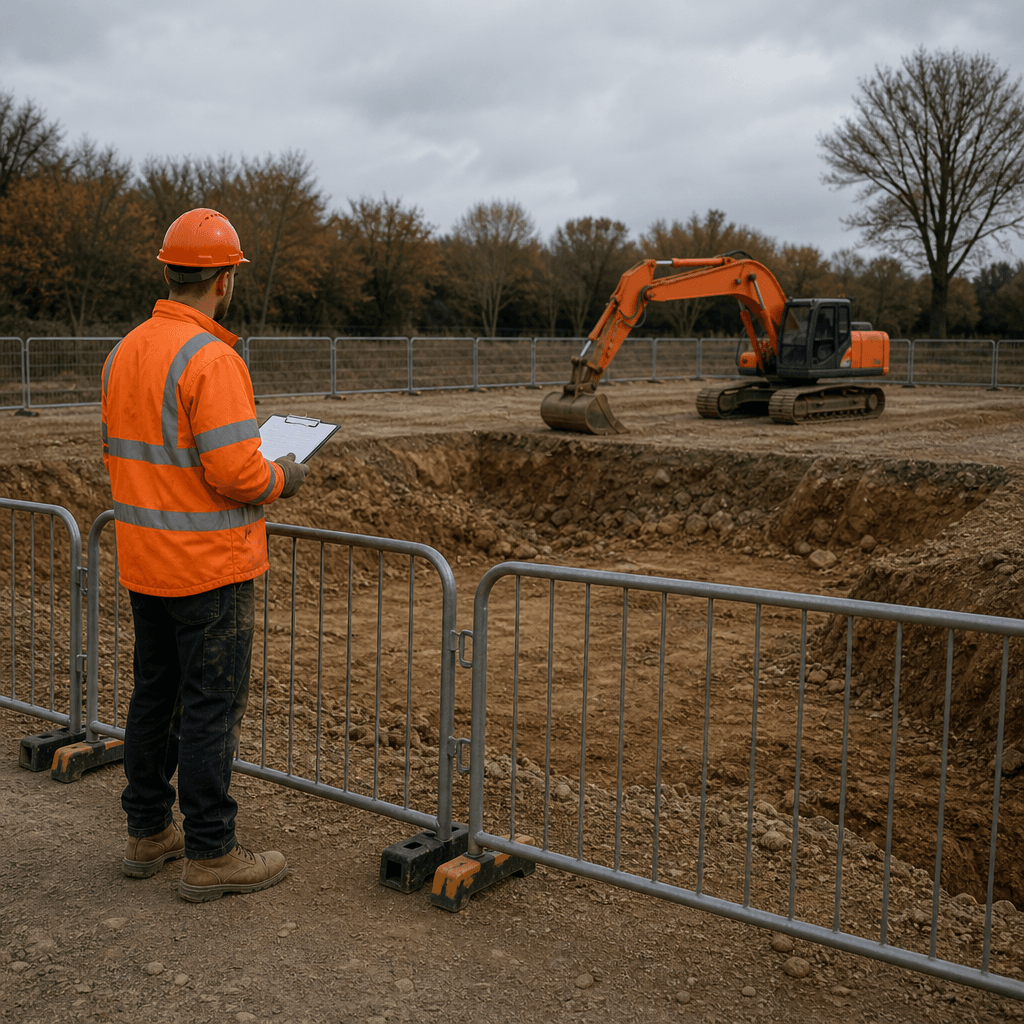
Check your RAMS before changed work starts and whenever the method, sequence, plant, people, location or conditions change. Update RAMS if it no longer matches the job. There is no fixed legal interval: the law turns on change, and on reason to suspect the assessment is no longer valid.
This post covers one decision: when a RAMS you have already accepted needs a new version. For the full process of revising, superseding and re-signing, see what happens after a RAMS is generated. For the first acceptance check, see how to check subcontractor RAMS before work starts.
This post covers Great Britain, where CDM 2015 applies. Northern Ireland has its own CDM 2016 regulations.
The worst version of an out-of-date method statement is no method statement at all. In June 2024, four subcontractors were fitting an air source heat pump on the roof of a 14-storey apartment block in Surrey. Sparks from welding lit uncovered rigid foam insulation, and the fire spread across the roof. The men escaped through a single opening in the floor and down a ladder. HSE found there was no risk assessment or method statement in place, despite the controlling firm's own policies. No permit to work was issued for the welding. The firm pleaded guilty to breaching regulation 15(2) of CDM 2015. It was fined £20,000 and ordered to pay £8,270 in costs.
When do you need to update RAMS?
You need a new version when the RAMS no longer describes the work that is about to happen. The test is not the date on the cover. It is whether the method, risks and controls written down still match the job.
For a contracts manager, the hard part is that the change often happens on someone else's paperwork. The groundworker swaps a machine, the roofer brings in a new gang, or the programme moves a task next to another trade. The document on file still says what was agreed three weeks ago.
What counts as a change on site?
If any of these happen, check the RAMS before that work starts. If it no longer matches the work, issue a new version:
- The method or process. HSE lists a change to a process as a reason to look again.
- The plant, equipment or substances. HSE names both equipment and substances.
- The people doing the work. HSE names changes to staff. In practice, treat a new gang or a new subcontractor the same way.
- Something goes wrong. HSE says to consider a review after accidents or near misses.
- Workers report a problem. HSE says the same if "your workers have spotted any problems".
- The controls are not working. HSE says you must check that the controls you put in place are working.
In practice, we would add a few more that come up on every multi-trade job:
- the sequence or programme moves, so the task now overlaps another trade;
- the location or access changes, such as a different scaffold lift or a new route in;
- a design change or a revised drawing alters what is being built;
- ground or weather conditions differ from what the RAMS assumed;
- the principal contractor or client gives an instruction that changes the work;
- an inspection finds that the controls on paper are not what is on site.
Our view: if you have to ask whether the change is big enough, treat it as a new version. A short revision costs far less than a task run to a plan nobody wrote.
Do RAMS have to be updated every year?
No. The law does not set an annual review or any other fixed interval for a risk assessment. HSE's guidance links review to change, problems and incidents, not to a calendar date.
A RAMS for a two-week task may never need a second version. A RAMS for a long job may need several. Some firms set a house rule, such as a fresh check at each new phase. That is good practice, but it is your rule, not a legal one.
What the law says
RAMS is a site term, and the law does not name it. The duties sit in two sets of regulations.
Regulation 3 of the Management of Health and Safety at Work Regulations 1999 covers risk assessment. Every employer must make "a suitable and sufficient assessment" of the risks. Regulation 3(3) says the employer who made the assessment must review it if:
- "there is reason to suspect that it is no longer valid"; or
- "there has been a significant change in the matters to which it relates".
Where the review shows changes are needed, the employer "shall make them". Regulation 3(6) requires an employer with five or more employees to record the significant findings.
CDM 2015 adds the construction duties:
- Regulation 15(2): a contractor "must plan, manage and monitor construction work". The aim is that, so far as is reasonably practicable, the work is carried out without risks to health and safety.
- Regulation 15(8) and (9): a contractor must give each worker under their control appropriate supervision, instructions and information. That includes information on the risks identified by the regulation 3 assessment.
- Regulation 13: the principal contractor must plan, manage and monitor the construction phase. It must organise cooperation between contractors, including successive contractors on the same site.
- Regulation 12(4): the principal contractor must ensure the construction phase plan is "appropriately reviewed, updated and revised from time to time".
Who updates it, and who checks it
The firm whose work it is revises its own RAMS. Regulation 3(3) puts the review duty on the employer, or self-employed person, who made the assessment. Regulation 15(2) puts the planning of the work on the contractor doing it.
In practice, the principal contractor does not rewrite a subcontractor's RAMS. Its duty under regulation 13 is to plan, manage, monitor and coordinate the construction phase. HSE describes the role as controlling the construction phase of any project with more than one contractor.
In practice, the main contractor checks that the new version is suitable before the changed work starts. Use the same check you used the first time, set out in our subcontractor RAMS guide. The law does not spell out this exact step. It is one way a principal contractor shows it is managing and monitoring the work. Our guide to managing subcontractors covers the wider picture.
If you are a sole trader working for a main contractor, the split is the same. You revise your RAMS and send the new version before you start the changed task.
How to record it
HSE says to update your risk assessment record with any changes you make. Beyond that, the steps below are practice, not legal duties:
- Give the new document a new version number and date.
- Write one line on what changed and why.
- Record who checked it on your side, and when.
- Re-brief the people doing the work, and record who was briefed on the new version.
- Keep the old version, marked as superseded. It shows what was in force on a given day, which matters after an incident or a dispute.
The re-brief is what links a revised document to the duty in regulation 15(8). A new PDF in a folder does not reach the gang on its own. You can see who has signed off, and who is still pending. Each sign-off records the exact version of the document the worker read.
A next step for firms running several sites
The Business plan lets you name an approver who has to accept a version before it is issued or sent to workers to sign. It tracks document review history and subcontractor evidence around the same job record. Our help article on document approvals shows where those controls live.
The bottom line
Check RAMS whenever the work it describes changes, and update RAMS before the changed work starts if it no longer matches. There is no fixed date in law. The subcontractor revises its own document, the main contractor checks it, and the people doing the work are re-briefed. Keep the old version.
This article is general guidance, not legal advice or a guarantee of compliance.
Sources
- Management of Health and Safety at Work Regulations 1999, regulation 3 (Risk assessment)
- CDM 2015, regulation 3 (Application in and outside Great Britain)
- CDM 2015, regulation 12 (Construction phase plan and health and safety file)
- CDM 2015, regulation 13 (Duties of a principal contractor at the construction phase)
- CDM 2015, regulation 15 (Duties of contractors)
- The Construction (Design and Management) Regulations (Northern Ireland) 2016
- HSE, Risk assessment: steps needed to manage risk
- HSE, Contractors: roles and responsibilities
- HSE, Principal contractors: roles and responsibilities
- HSE press release, 30 October 2026: apartment roof blaze in Surrey
Create the first job pack free
Start with one real job: RAMS, CPP, site induction and sign-off evidence. No card required. Review everything before you use it.
Create my free job pack →