Who Gets the Licence When Scaffolding Goes Over the Pavement?
Who applies for a scaffolding licence on an English pavement? Check the highway boundary, council conditions and expiry before the scaffold goes up.
5 min read

TL;DR
Who applies for a scaffolding licence on an English pavement? Check the highway boundary, council conditions and expiry before the scaffold goes up.
Check the scaffolding licence arrangements when you price the job. In England, check with the highway authority before putting scaffold on or over a public pavement. GOV.UK places responsibility for obtaining the licence on the builder or scaffolding company. The local authority sets its application process and may accept applications only from the scaffolding company. The householder should check the licence exists and covers the time the scaffold will remain.
What if all the scaffold feet are inside the front garden?
Take a terraced house with a short front garden. The standards fit behind the wall, but the working platform projects over the pavement. Mark both the feet and the outside edge of the platform on a sketch. A quote saying “all legs on private land” tells you where the scaffold bears. It leaves open the question of what occupies the space above the highway.
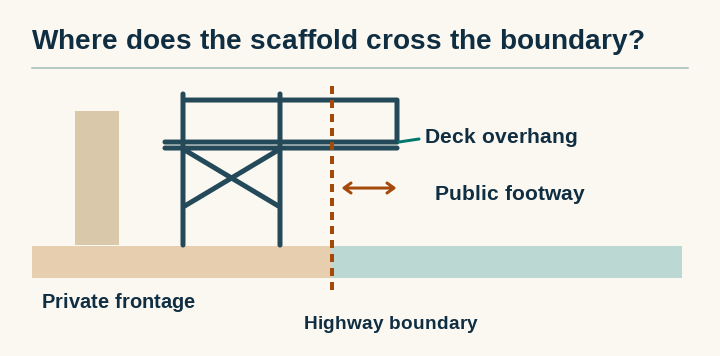
Section 169 of the Highways Act 1980 covers structures on or over a highway that obstruct it. If the boundary or the projection is in doubt, send the sketch to the authority and obtain its decision before erection. A garden wall or a change in paving can be a useful landmark. The authority can confirm how the highway boundary affects the proposed layout. Highways Act 1980, section 169
Who applies for the scaffolding licence?
Name the applicant when placing the scaffold order. West Northamptonshire, for example, directs members of the public to use a scaffolding company to apply on their behalf. Check the council for the actual street before promising a start date. Allow for its notice period, any required drawings, insurance evidence and traffic-management arrangements. West Northamptonshire’s application rules
Ask for the granted licence, its reference, the approved footprint and its start and end dates. Read the conditions with the scaffolder against the street as it is today. Can a wheelchair user or someone pushing a pram use the agreed route? Is the entrance next door still accessible? If the design needs a different pedestrian route, take that back to the authority before changing the layout.
What happens if the roofer needs another week?
Work backwards from the date the scaffold will actually come down. Finishing the roofing on Friday is little help if the dismantling gang comes the following Thursday and the licence expires on Monday. Put the expiry against the scaffold booking, name who tracks it and agree who will contact the authority if the programme slips.
Check the authority’s extension process before the existing permission runs out. Keep its reply with the licence and tell the supervisor and scaffolder the revised dates and conditions. If permission for the extra time is uncertain, get directions from the authority and agree a safe plan with the scaffolder. GOV.UK scaffolding rules
What should go on the sketch you send to the council?
Start with the street address, house number and the length of frontage affected. Draw the building line, the assumed highway boundary and the projection of the proposed scaffold. Mark entrances to neighbouring properties, street furniture and any other feature that narrows the walking route. Include the proposed dates for erection and dismantling. Ask the scaffolder to check that the sketch matches the arrangement they are pricing.
Use measurements from the job. A sketch that says “room for pedestrians” gives the highway officer little to assess. Show where the route is narrowest and what is on either side of that point. Then ask the authority what clearance and protection it requires for that location. Avoid borrowing a dimension or fee from a council in another area. The licence conditions for this street govern the arrangement.
What if the scaffold changes after permission is granted?
Imagine the proposed platform is just long enough to repair the gutter above the front door. Once the scaffolder sets out the work, the roofer asks for an extra bay to reach the neighbouring downpipe. Compare the new footprint and overhang with the approved drawing. Get the scaffolder and the authority to agree what amendment or new permission is needed before the change takes place. A neighbour agreeing to the repair does not settle the highway question.
Give the crew the latest drawing and licence reference. Keep any conditions about lighting, barriers, access or the hours of erection and dismantling with the person supervising that operation. If a delivery vehicle, skip or parked car later makes the pedestrian route unusable, deal with the obstruction and contact the authority where its agreed arrangements can no longer be maintained.
When the scaffold comes down, check the authority’s close-out requirements, the condition of the pavement and who is responsible for removing any remaining barriers. Record the date the highway was cleared. That gives the builder and the householder the same answer if a query arrives after the roofing team has left.
Is the licence enough to hand the scaffold over for use?
The licence deals with occupation of the highway. The scaffold still needs the appropriate design, handover and competent inspections. Keep the licence and inspection record together so the supervisor can answer two separate questions at the gate. Is this the arrangement the council allowed? Is this scaffold ready for the crew to use? Our scaffolding safety guide covers the second question.
For a job involving several trades, put the licensed layout and pedestrian arrangements in the construction phase plan. Brief deliveries and visiting trades on the route before they arrive. A delivery that blocks the accessible path can undo an otherwise sound pavement arrangement in minutes.
Create the first job pack free
Start with one real job: RAMS, CPP, site induction and sign-off evidence. No card required. Review everything before you use it.
Create my free job pack →